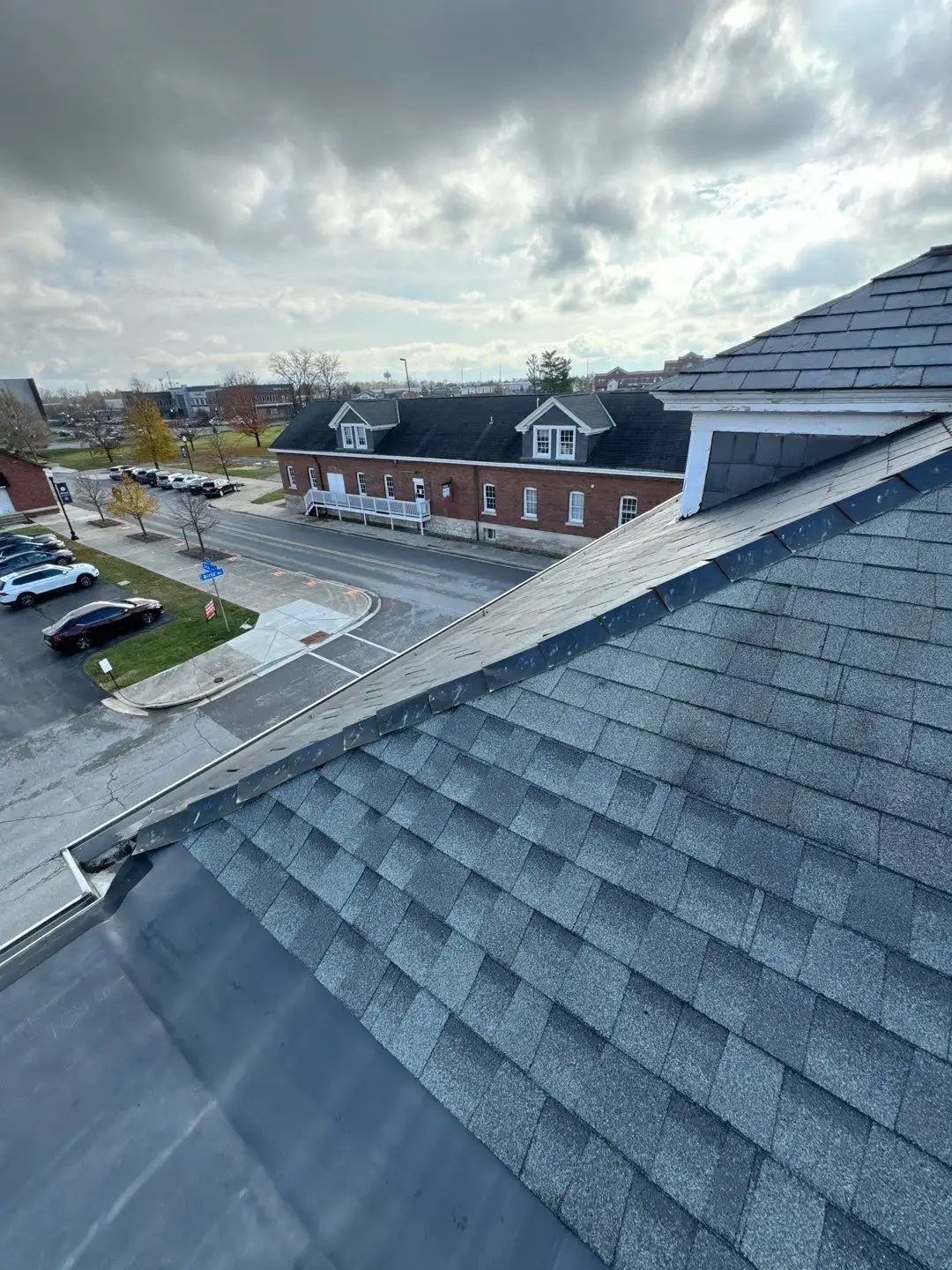
Step 1: Baseline Condition Assessment
- Pull existing documents: original install date, warranty, prior repair invoices, leak history log.
- Schedule a no cost commercial roof inspection with a two person crew on a dry day, wind under 15 mph.
- Measure total square footage, perimeter linear feet, count penetrations, drains, scuppers, and rooftop units.
- Grade membrane on a 1 to 5 scale: 1 = new, 5 = end of life. Programs are only sold for roofs grading 1 through 3.
- Photograph every penetration, seam transition, and termination bar with geotagged images.
- Use thermal imaging on overcast evenings to flag trapped moisture. Anomalies over 3 square feet are core sampled.
- Core samples are cut at 2 inches by 2 inches, photographed wet and dry, then patched with manufacturer approved target patches before crew leaves the roof.
- Substrate condition gets noted: steel deck corrosion, wood blocking rot at edges, lightweight concrete saturation. Each finding gets flagged on the roof plan with a coordinate reference.
If grading hits 4 or higher, we redirect the conversation toward restoration versus replacement rather than enroll the building in a program that will not deliver value. Buildings that grade a 3 with isolated 4 zones may still qualify for a program with a written exclusion on the failing area, repaired or replaced under a separate scope before enrollment activates.
Step 2: Define Program Tier
- Tier A (Essential): 1 visit per year, spring. Drain clearing, debris removal, visual inspection, written report. Best for roofs under 5 years old.
- Tier B (Standard): 2 visits per year, spring and fall. Adds seam probe testing, sealant touch ups, minor flashing repairs up to 4 labor hours included.
- Tier C (Comprehensive): 2 scheduled visits plus 1 post storm inspection per year. Adds infrared scan every 24 months, up to 8 labor hours of included repairs, priority scheduling for leak calls.
- Tier D (Asset Management): Quarterly visits, full IR scan annually, 16 included labor hours, drain strainer replacement, walkway pad inspection, warranty compliance documentation.
- Tier selection guidance: roofs under 5 years with active manufacturer warranty fit Tier A or B. Roofs 6 to 12 years old typically fit Tier C. Roofs 13+ years or multi building portfolios fit Tier D.
Step 4: Scheduled Visit Procedure
- Pre visit: notify facility contact 48 hours ahead, confirm roof access route, verify fall protection anchor points.
- Drain and scupper clearing: remove all debris within 36 inches of drains, flush with water, verify flow rate.
- Field membrane walk: inspect every square foot in grid pattern, mark defects with chalk and photograph.
- Seam inspection: probe T-joints and field seams with blunt probe at 5 pound pressure. Failures get marked for hot air weld or sealant repair.
- Penetration check: inspect every pipe boot, curb, and termination. Specification is zero exposed sealant cracks over 1/16 inch wide.
- Flashing review: parapet caps, counterflashing, and pitch pans get measured for separation. Tolerance is under 1/8 inch gap.
- Rooftop unit perimeter: check condensate lines, gas line supports, walkway pads around HVAC equipment.
- Coping and edge metal: verify fastener spacing at 12 inches on center, check for backed out screws, confirm cleat engagement at hemmed edges.
- Lightning protection: inspect air terminals, down conductors, and bonding clamps if present. Loose components get tightened to spec.
- Documentation: written report with photos, defect list, completed repairs, and recommendations submitted within 5 business days.
Step 5: In-Visit Repair Thresholds
- Sealant top coat on cracked pitch pans: included in Tier B and above.
- Single seam weld under 12 linear inches: included in Tier C and above.
- Pipe boot replacement: included up to 2 boots per visit in Tier D.
- Termination bar re fastening up to 8 linear feet: included in Tier C and above.
- Walkway pad re adhesion or replacement up to 4 pads: included in Tier D.
- Anything over included labor hours is quoted at a standing rate disclosed in the program agreement, with no surprise billing.
- Repairs requiring more than 16 labor hours or specialty materials are quoted as a separate project with its own scope document.
Step 8: Program Renewal and Exit Criteria
- Renewal occurs 60 days before contract expiration with an updated grading, refreshed pricing, and any tier adjustments.
- Roofs that drop to grade 4 during the program term trigger a re scope conversation, not an automatic cancellation.
- Terre Haute Commercial Roofing provides a written transition plan if replacement becomes the recommended path, including phased budgeting options for Terre Haute property owners managing multiple assets.
- Program records transfer to a new owner at building sale, preserving warranty documentation and repair history for the next operator.
Step 7: Annual Reporting
- Year end summary: all visits, all defects found, all repairs performed, remaining warranty status.
- Reserve forecast: estimated repair costs for the next 24 months based on current grading.
- Replacement projection: estimated useful life remaining, expressed in years, updated each cycle.
- Insurance package: photo set and report formatted for carrier submission if a storm event occurs.
- Capital planning memo: prioritized list of work for the next budget cycle, ranked by risk and cost.
Step 6: Leak Response Protocol
- Leak call triggers a phone based severity assessment to triage active intrusion versus stain investigation.
- Active leaks get prioritized for tarping and dry in. Cause investigation follows once the building is stable.
- Program members get scheduled ahead of non program work. See commercial emergency roof repair for the active leak workflow.
- Interior water damage is documented separately and may involve drying equipment if absorbent materials got wet.
- Leak source confirmation uses water testing with a controlled flow, starting downslope and working up, isolated zones at 10 to 15 minute intervals.
- Post repair verification includes a follow up inspection at the next scheduled visit to confirm the fix held through a full freeze thaw or storm cycle.
Step 3: Pricing Specifications
Pricing scales with square footage, system type, and access difficulty. A single story TPO roof with interior ladder access prices at the low end. A four story BUR with crane staging prices at the high end. The chart below shows typical annual program pricing for a 20,000 square foot commercial roof in Terre Haute.
Annual Maintenance Program Pricing (20,000 sq ft roof)
Ranges reflect typical Central Indiana commercial buildings; multi story and high penetration roofs price higher.
Pricing modifiers that adjust the base range:
- High penetration density (over 1 penetration per 400 sq ft): add 10 to 18 percent.
- Crane or lift required access: add $400 to $1,200 per visit depending on equipment.
- After hours access requirement (retail, schools, medical): add 12 to 20 percent.
- Ballasted EPDM systems requiring stone displacement: add 8 to 15 percent.
- Multi building portfolios of 3+ roofs under one contract: deduct 5 to 10 percent.