Quick Answer
Most EPDM leaks in Terre Haute trace back to failed seams, lap joints, or flashing details rather than the field membrane itself. A targeted patch runs $300 to $900. Seam restoration across a roof section runs $2 to $6 per square foot. If the insulation is saturated or the membrane is brittle and cracking, recover or replacement becomes the better spend. Free inspections from Terre Haute Commercial Roofing include moisture probing and infrared scanning so you know which category your roof falls into before money changes hands.
Where EPDM Roofs Actually Leak
The rubber sheet itself rarely fails first. Failure points cluster at transitions and penetrations.
Common Leak Origins
- Seams and laps: Older tape seams dry out and lift at the edges
- Pipe boots and vents: Rubber collars crack at the base after 10 to 15 years
- Drains and scuppers: Sealant pulls away from metal flanges
- Wall flashings: Termination bars loosen, counter flashing rusts
- Punctures: Dropped tools, HVAC service traffic, hail strikes
- Shrinkage: Old ballasted or fully adhered EPDM contracts and pulls flashings tight
Symptoms You May Notice Inside
- Brown ring on a ceiling tile, often offset from the actual roof entry point
- Musty smell near the top of a wall after rain
- Drips during sustained rain but not light showers
- Bubbling paint along a parapet wall
- Wet insulation visible when a ceiling tile is lifted
- Rust streaks on exposed steel deck or bar joists in unfinished spaces
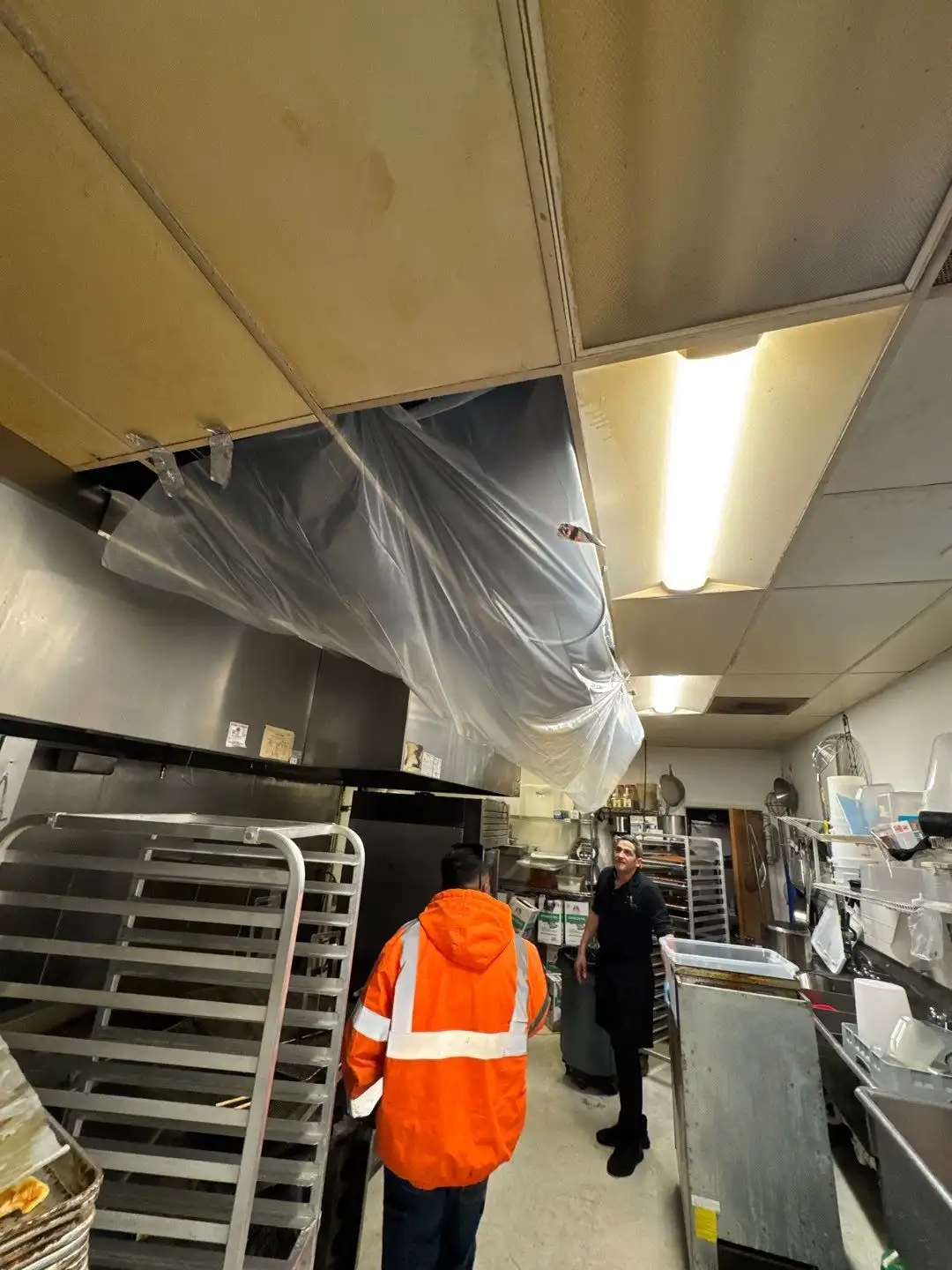
- Condensation like dripping that actually traces back to wet roof insulation slowly releasing moisture
When to Repair, Recover, or Replace
Use these decision points as a starting frame. A free inspection from commercial roof inspections confirms which path fits your building.
Repair Makes Sense When
- The membrane is under 15 years old and still flexible
- Leaks are isolated to one or two penetrations
- Insulation probes come back dry
- Budget timing favors maintenance over capital spend
Recover or Replace Makes Sense When
- More than 25 percent of the insulation reads wet
- Seams are failing across multiple sections
- Membrane is chalky, cracked, or shrunken
- You have already paid for three or more repairs in 24 months
Extending the Life of Your Repair
A good patch is only half the job. The other half is keeping the rest of the roof from following the failed section into early retirement. Most Terre Haute Commercial Roofing repair clients add a light maintenance plan that catches small issues before they grow into the next claim.
Maintenance Steps That Pay Back
- Spring and fall inspections with photo documentation
- Drain and scupper clearing after heavy leaf drop
- Walk pad installation along HVAC service routes
- Annual sealant touch up at metal terminations
- Caulk and boot checks after any rooftop equipment work
Interior Water Damage from EPDM Leaks
Roof leaks rarely stop at the ceiling. Water finds wall cavities, insulation, and flooring below. If interior damage is already present, our attic water damage and roof leak restoration process handles drying, antimicrobial treatment, and material removal alongside the roof fix. Coordinating both trades on one visit shortens the timeline and reduces total cost.
Repair Methods and What They Cost
The right repair depends on the failure mode. Our crews carry materials for each category so we can dry the building in during the inspection visit when conditions allow.
| Repair Type | Typical Use | Cost Range | Expected Life |
|---|---|---|---|
| EPDM patch with primer and tape | Small puncture, isolated tear | $300 to $900 | 5 to 10 years |
| Pipe boot replacement | Cracked vent collar | $250 to $600 each | 10 to 15 years |
| Seam reseal with cover tape | Lifted laps over a section | $2 to $6 per sq ft | 8 to 12 years |
| Liquid EPDM coating | Aging field membrane, multiple small issues | $3 to $7 per sq ft | 10 to 15 years |
| Full membrane recover | Dry insulation, tired top layer | $7 to $12 per sq ft | 20 plus years |
| Tear off and replace | Wet insulation, rotted deck | $9 to $16 per sq ft | 25 to 30 years |
Why EPDM Fails in Terre Haute Specifically
Central Indiana puts rubber roofs through a tough cycle. Summer surface temperatures on black EPDM can exceed 160 degrees, then drop below freezing within weeks. That expansion and contraction stresses every seam, fastener, and flashing termination on the roof. Hail events, common across the region in spring storms, leave bruises that may not leak right away but weaken the membrane around mechanical units and walkway pads. Heavy snow loads can also drive ponded meltwater against parapet flashings that were never designed to sit in standing water.
Age-Related Patterns We See
- 5 to 10 years: Mostly punctures from foot traffic and isolated seam lifts
- 10 to 18 years: Pipe boot failures, sealant separation at metal, early seam separation
- 18 to 25 years: Widespread seam issues, shrinkage at perimeters, chalky surface
- 25 plus years: Cracking, splits over insulation joints, wet insulation on probe
How We Diagnose the Real Source
A drip inside almost never sits directly under the entry point on the roof. Water tracks along seams, insulation joints, and deck flutes before it finds a hole in the ceiling. Our process for roof leak origin detection versus repair separates these two steps so the patch goes on the right spot. When an active leak is reported, severity is assessed over the phone first so we can advise on bucket placement, electronics protection, and whether emergency tarping and dry in should be prioritized before a full inspection is scheduled.
Inspection Steps
- Interior assessment of stain pattern and ceiling moisture
- Roof walk to document seams, flashings, and penetrations
- Infrared or capacitance moisture scan to map wet insulation
- Test cuts in suspect areas to confirm substrate condition
- Written findings with photos and a repair recommendation